| AUDUBON PLACE and SAMUEL ZEMURRAY |
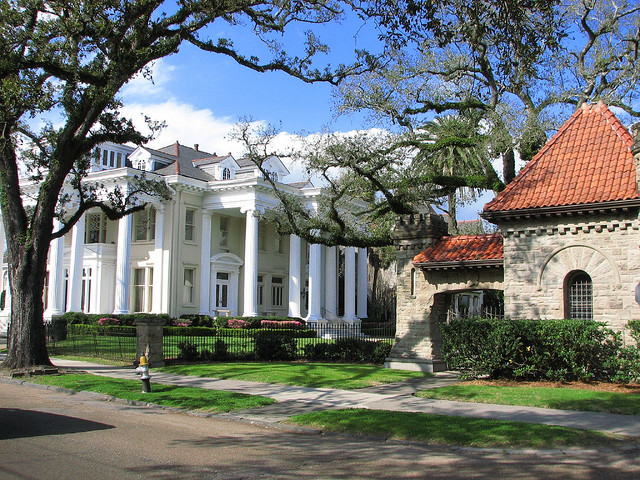
| To the right, one of the gatehouses standing sentry at the entrance to Audubon Place; to the left, the residence of the president of Tulane University - a gift to the school from Samuel Zemurray. |
Audubon Place is a private street located next to Tulane University and across St.
Charles Avenue from Audubon Park. When George Blackwelder developed the
street in the late 1890's, his intent was to create a millionaire's enclave and that is
certainly what he accomplished. There are twenty-eight houses on Audubon
Place, most built in the early 1900's in various revival styles, and each worth
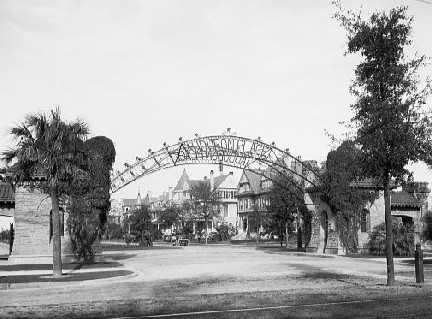
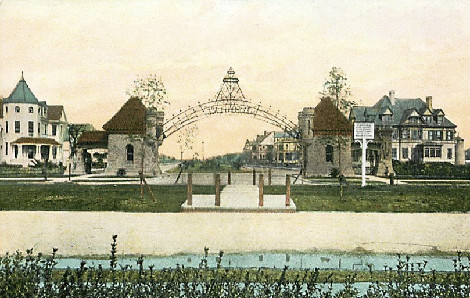
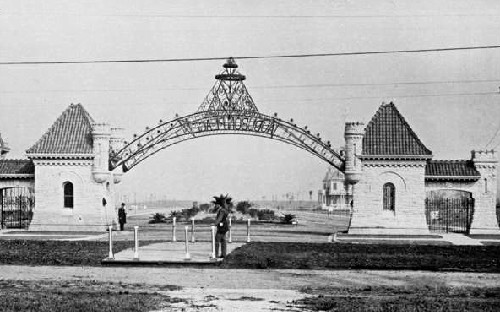
several million dollars today. The street sits behind a decorative iron arch and two
turreted stone gatehouses.
The first home on the left at the entrance to Audubon Place is the residence of
Tulane University's president. It was constructed in the early 1900's by William T.
Jay, but for many years, it was the home of Samuel Zemurray. Mr. Zemurray was
the founder of Cuyamel Fruit Company and became president of United Fruit
Company, at the time, the most influential company of its kind in the world. Both
companies had significant influence in, not only the economic, but, also, the
political history of several Latin American countries.
Mr. Zemurray was a self-made man, who started out selling the bananas that
arrived at the port of New Orleans which had ripened in transport and needed to
be sold quickly. From that modest beginning, he went on to become a wealthy man
and one of the most important figures in Latin American commerce.
He made generous donations to Tulane University - including the home pictured
above at the entrance to Audubon Place - and many philanthropic causes in the
U.S. and in Central America. He died in 1961, in New Orleans, where he'd lived
most of his life.
His wife, Sarah, left a beautiful legacy in the form of Zemurray Gardens, north of
Lake Pontchartrain, near Hammond, LA. The house the Zemurrays built there was
to be a lodge and the accompanying land reserved for timber. But, when Mrs.
Zemurray looked at the 150 acres of tall pines, she had a different vision - a vision
of beautiful, blooming azaleas planted along winding trails through the woods. It's
said that it was her secret garden, because she labored over it until it was almost
completed before she presented it to Mr. Zemurray, fearing that he - a practical
man who had plans for the timber on those acres - might say no to the project.
She must've waited until the azaleas were in bloom, because Mr. Zemurray
acquiesced, the pine trees were saved and Zemurray Gardens was born. It's open
to the public every year during the azalea season in March and April. -- Nancy
Charles Avenue from Audubon Park. When George Blackwelder developed the
street in the late 1890's, his intent was to create a millionaire's enclave and that is
certainly what he accomplished. There are twenty-eight houses on Audubon
Place, most built in the early 1900's in various revival styles, and each worth
several million dollars today. The street sits behind a decorative iron arch and two
turreted stone gatehouses.
The first home on the left at the entrance to Audubon Place is the residence of
Tulane University's president. It was constructed in the early 1900's by William T.
Jay, but for many years, it was the home of Samuel Zemurray. Mr. Zemurray was
the founder of Cuyamel Fruit Company and became president of United Fruit
Company, at the time, the most influential company of its kind in the world. Both
companies had significant influence in, not only the economic, but, also, the
political history of several Latin American countries.
Mr. Zemurray was a self-made man, who started out selling the bananas that
arrived at the port of New Orleans which had ripened in transport and needed to
be sold quickly. From that modest beginning, he went on to become a wealthy man
and one of the most important figures in Latin American commerce.
He made generous donations to Tulane University - including the home pictured
above at the entrance to Audubon Place - and many philanthropic causes in the
U.S. and in Central America. He died in 1961, in New Orleans, where he'd lived
most of his life.
His wife, Sarah, left a beautiful legacy in the form of Zemurray Gardens, north of
Lake Pontchartrain, near Hammond, LA. The house the Zemurrays built there was
to be a lodge and the accompanying land reserved for timber. But, when Mrs.
Zemurray looked at the 150 acres of tall pines, she had a different vision - a vision
of beautiful, blooming azaleas planted along winding trails through the woods. It's
said that it was her secret garden, because she labored over it until it was almost
completed before she presented it to Mr. Zemurray, fearing that he - a practical
man who had plans for the timber on those acres - might say no to the project.
She must've waited until the azaleas were in bloom, because Mr. Zemurray
acquiesced, the pine trees were saved and Zemurray Gardens was born. It's open
to the public every year during the azalea season in March and April. -- Nancy
| Entrance to Audubon Place in 1898, only two houses had been built so far. |
| 1908, the lots are beginning to fill. |
| 1910, the center piece on the top of the arch is no longer there. |
| The top photograph is courtesy of Flickr Creative Commons' Randy Levine. |
| The link to this page is: http://old-new-orleans.com/NO_Audubon_Place.html Back to Old New Orleans Whispers - Home |

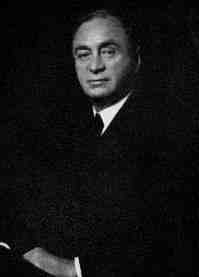
| Samuel Zemurray |